Sailors, Swallows, and a Whole New Generation: The Flash Revival Nobody Predicted
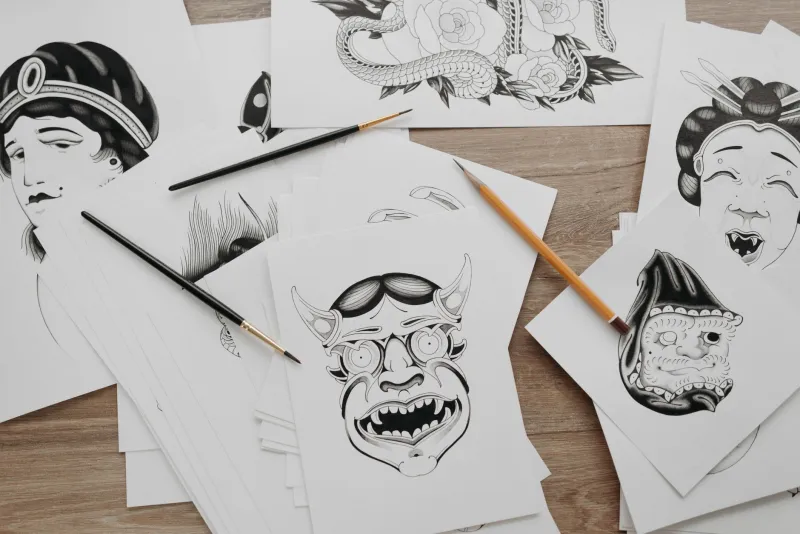
Walk into almost any reputable studio in America right now and you'll spot it: a wall of painted sheets covered in daggers, panthers, roses, and swallows — designs your great-grandfather might have gotten at a dockside parlor in 1935. And the people pointing at them? Mostly twenty-somethings.
The flash wall, once a nostalgic prop, has become the beating heart of a full-blown revival. Traditional American tattooing — bold lines, limited color, designs built to read clearly from across the street — is dominating appointment books in a way nobody in the industry saw coming.
Why Old School Never Actually Left
American traditional was never really gone; it just went quiet. The style survived decades of trends because it's built on function. Bold will hold. Those two phrases get repeated in every apprenticeship in the country, and they're true: heavy black outlines and saturated color age gracefully on skin in a way that whisper-thin detail work sometimes doesn't.
But the current wave isn't about longevity — it's about belonging. Gen Z clients who grew up on Instagram feeds full of hyper-detailed, almost photorealistic work are gravitating toward designs that feel like artifacts. There's a story attached to a swallow or a ship in a storm. It connects the wearer to a century of sailors, soldiers, and outsiders who wore the same marks.
"My youngest clients ask for the oldest stuff," says a shop owner in Austin who's been tattooing since the nineties. "They want to feel like part of the lineage. That's not something a fine line floral gives them."
Flash Days Are the New House Party
The social mechanics of the revival are just as interesting as the aesthetics. Flash days — events where studios post a sheet of pre-drawn designs, offer them at a flat rate, and take walk-ins all day — have become something closer to festivals than appointments.
Studios in Chicago, Nashville, and Phoenix report lines wrapping around the block. Friends book together and make a day of it. Some shops bring in food trucks or local vendors. The first-come, first-served format strips away the weeks of consultation and design back-and-forth that normally define the process, replacing it with spontaneity — and a little bit of friendly competition over who spotted the best design first.
There's also a democratizing effect. Flat-rate flash events make quality work accessible to people who might be priced out of large custom pieces. For a couple hundred dollars, a first-timer can get a genuinely well-executed tattoo from a skilled artist, no portfolio review required.
The Designs Themselves Carry Weight
Part of the appeal is that the iconography still communicates. A swallow traditionally marked a sailor's miles at sea. An anchor meant stability. A dagger through a rose balanced love and loss. Modern wearers may not know every code, but they sense the symbolism — and artists are happy to teach it.
Interestingly, the revival isn't purely museum-piece. Younger traditional artists are bending the canon: reimagined color palettes, queer and feminist twists on classic imagery, flash sheets that include subjects the old sailors never would have asked for. The style is old; the voices painting it are entirely new.
That's what keeps a tradition alive, really. Not preservation under glass, but a fresh hand on the same brush. The flash wall isn't a history exhibit — it's an invitation, and an entire generation is walking up to it.