Rooted in Ink: The Unexpected Ways Tattoos Keep People in Place
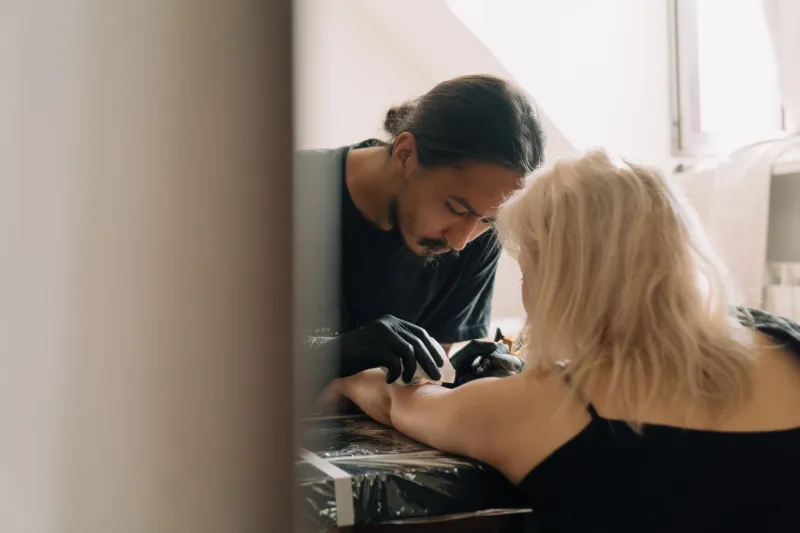
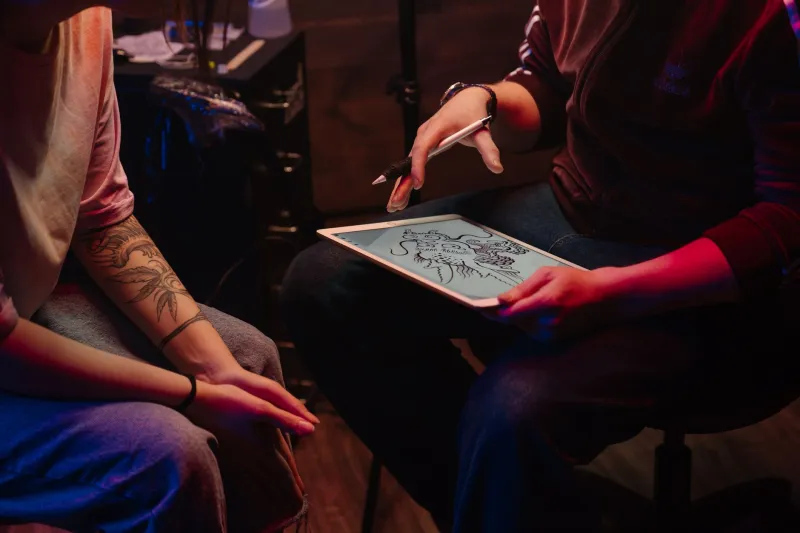
Jamie Reyes had every intention of leaving Portland. She'd already lined up a job in Austin, put her apartment on Craigslist, and told her friends she was gone by spring. Then her friend dragged her to a small shop in the Alberta Arts District for one last tattoo before she headed south. The artist who took her appointment was a quiet woman named Dani who spent forty-five minutes just talking with Jamie before picking up a single needle. Three hours later, Jamie had a piece of Pacific Northwest flora wrapped around her forearm — and something else she hadn't expected: a reason to reconsider.
"I kept thinking, I can't leave before I finish this sleeve," Jamie says, laughing a little. "And then it was, I can't leave before I see what she does next. And then it was just... I didn't leave."
Jamie's story isn't as rare as you might think.
The Geography of Getting Marked
There's a quiet phenomenon happening in tattoo culture that doesn't get nearly enough attention: people planting roots — or pulling up stakes and going back — specifically because of a tattoo artist. It's not just about the art. It's about the ritual, the relationship, and the way a single appointment can make you feel genuinely claimed by a place.
Tattoo artists are, almost by accident, some of the most community-embedded professionals in any city. They work out of specific neighborhoods. They build long-term relationships with clients. They pour local culture — the plants, the skylines, the slang, the grief, the pride — directly into the skin of the people who live there. When you get tattooed in a city, you carry a piece of that city with you forever. And sometimes that's exactly why you can't bring yourself to go.
Marcus Webb, a tattoo collector living in New Orleans, grew up in suburban Ohio and moved south for a graduate program he eventually abandoned. He'd planned to head back to the Midwest once he figured out his next move. That was eleven years ago.
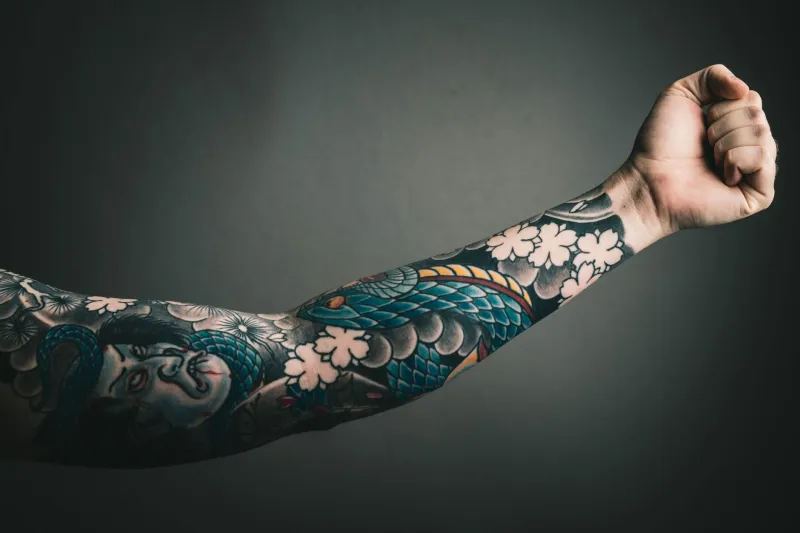
"I started getting work from an artist here who does this incredible dark American traditional stuff with Louisiana imagery," Marcus says. "Cypress trees, crawfish, storm imagery. And at some point I realized my body was becoming a document of this place. Leaving felt like stopping a sentence mid-thought."
The Pull of the Artist
For many people, the anchor isn't the city itself — it's the specific artist. Tattoo relationships, especially long-term ones, operate with a kind of intimacy that's genuinely hard to replicate. You've been vulnerable with this person. They've touched you, heard things about your life you haven't told many people, and made something permanent on your body. That's not a professional relationship you walk away from easily.
Lena Park, a tattoo artist based in Chicago's Pilsen neighborhood, has watched this play out more times than she can count. "I have clients who've turned down jobs in other cities because they're mid-sleeve," she says. "And I have clients who've moved back to Chicago after years away specifically to continue work we started together. It's deeply flattering and also kind of wild when you think about it."
Lena's been tattooing for fourteen years. She describes the artist-client relationship as something that exists "outside of normal time" — appointments happen months apart, but the continuity is intense. "I know things about people's lives across a decade. I've tattooed people through divorces, through losing parents, through coming out. There's a through-line. And that through-line is tied to this city, to this shop, to this block."
Going Back for More Than a Visit
Then there are the people who leave and return — not just for holidays, but specifically for ink.
Derek Huang grew up in Seattle, moved to New York for work, and has been flying back to the Pacific Northwest twice a year for the past five years — not to see family, though he does that too, but to continue a back piece he started with his original artist the summer after high school.
"It would be insane to someone on the outside," he admits. "I fly cross-country for a tattoo appointment. But this piece is about where I'm from. It only makes sense for it to be made there, by someone who's from there too. Doing it in New York with a different artist would feel wrong, like translating a poem into a language it wasn't written for."
Derek's back piece is now about sixty percent complete. He expects to finish it in another two years. He's already thinking about what comes after — and whether those pieces might be reason enough to eventually move back.
Community as Skin
There's something anthropologically interesting happening here that tattoo culture has always understood, even when the mainstream hasn't: getting tattooed is a ritual of belonging. Indigenous tattooing traditions around the world have long encoded community identity, lineage, and place directly into the body. Contemporary American tattoo culture operates in a different register, but the underlying impulse isn't entirely different.
When you get tattooed by an artist who is embedded in a specific community — who draws on local imagery, local history, local aesthetics — you're not just buying art. You're participating in something. You're saying, in a very permanent way, this place has marked me.
For Jamie Reyes, still in Portland five years after she was supposed to leave, that's exactly what happened. Her sleeve is almost done now. She's already talking with Dani about what comes next.
"People ask me why I stayed," she says, pulling up her sleeve to show the ferns and rain clouds and Douglas fir branches wrapped around her forearm. "And I always say, well, look at this. Where else would I go?"