Confessions Under the Needle: How Tattoo Studios Became America's Most Unexpected Safe Spaces
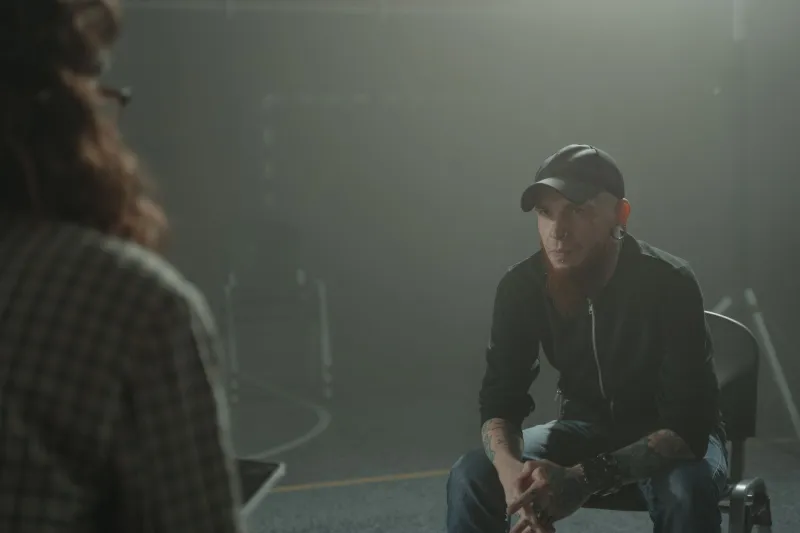
Marcus Webb has been tattooing in Atlanta for eleven years. He's inked celebrities, covered scars, and sketched thousands of custom designs. But if you ask him what the most memorable part of his career has been, he doesn't reach for a portfolio.
"A woman came in for a half-sleeve last spring," he says, leaning back in his studio chair. "By hour two, she was telling me about her divorce — stuff she said she hadn't even told her sister. By hour three, she was crying. Good crying, she said. Like she'd put something down."
Webb isn't a therapist. He's never taken a psychology course. But he's heard more confessions than most pastors, and he's not alone.
Across the country, tattoo artists are quietly becoming something no art school prepared them for: confidants, sounding boards, and accidental emotional anchors for the people sitting in their chairs.
Why the Chair Changes Everything
There's a specific alchemy to a tattoo session that's hard to replicate anywhere else in modern life.
First, there's the time. A meaningful tattoo — a sleeve, a back piece, even a detailed forearm design — can take anywhere from two to eight hours. That's longer than most therapy appointments, longer than most first dates, longer than most of us spend in uninterrupted conversation with anyone.
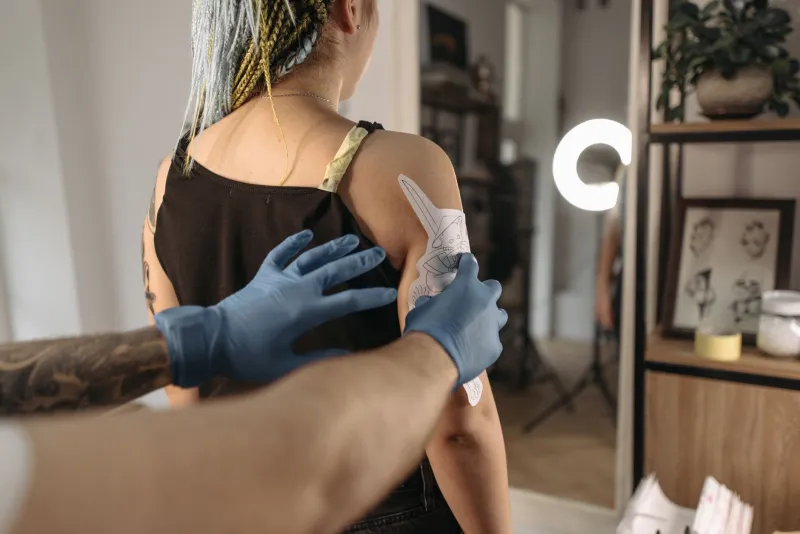
Then there's the physical dynamic. You're lying or sitting still, often in a position of some vulnerability. Someone is touching you, focused entirely on your body. The pain is low-grade but constant, which has a strange loosening effect on inhibition. Psychologists have long noted that people open up more easily when they're not making direct eye contact — it's why car conversations get so honest, why people confide in bartenders, why therapy couches face away from the therapist. The tattoo chair operates on a similar principle.
"You're not sitting across from me at a table," says Dani Cruz, who runs a studio in Denver. "You're beside me, or under me in a sense, and I'm doing something that requires my full attention. That takes the pressure off. People stop performing."
And then there's the permanence of what's happening. Getting a tattoo is, by definition, a moment of intentional transformation. People show up already in a reflective mood. They've thought about this. They have a reason. And reasons, it turns out, tend to come with stories.
The Things People Say
Ask any experienced tattoo artist and they'll have a catalog of moments that stopped them mid-stroke.
Jordan Hale, who tattoos out of a studio in Chicago's Wicker Park neighborhood, remembers a young guy who came in for a simple memorial piece — his father's initials. "He started explaining the design, and then he just... kept going. His dad had been abusive. He was getting the tattoo to mark the end of grieving someone complicated. He'd never framed it that way out loud before. I could tell because he looked almost surprised when he said it."
Cruz recalls a client who booked a floral piece and ended up disclosing a health diagnosis she hadn't told her family about yet. "She said she needed to do something for herself before everything changed. I was the first person she'd said it to."
These aren't isolated incidents. They're the texture of the job.
What's striking is how often clients describe the studio as a place where normal social rules don't apply. "I don't know why I told him all of that," said Maya, a 29-year-old teacher from Nashville who recently finished a large botanical piece. "I barely know him. But it felt like whatever I said in that room stayed in that room. Like Vegas, but for feelings."
Artists Navigate Uncharted Territory
Here's the thing nobody talks about: tattoo artists don't sign up for this. There's no training, no handbook, no decompression ritual at the end of a shift.
"I've had sessions that were genuinely heavy," Webb admits. "Someone sharing trauma, or grief, or something they're ashamed of. And then they leave, and I have another client in an hour. You carry that."
Most artists develop their own informal protocols. Cruz says she tries to follow the client's lead — never prying, but not deflecting either. "If someone wants to talk, I'm here. If they want silence, that's sacred too. Reading the room is part of the craft."
Hale draws a firm line at advice. "I'm not going to tell someone what to do about their marriage or their estranged kid. I can listen. I can affirm. But I'm not their therapist, and pretending I am would be doing them a disservice."
Some artists have started talking openly about the emotional labor involved — not to complain, but to normalize it. A few studios have begun building in longer breaks between clients specifically because of this. Others have found community with fellow artists who understand the particular weight of being trusted with someone's rawest moments.
"We need to take care of ourselves too," Cruz says plainly. "Holding space for people is beautiful. It's also exhausting if you don't have somewhere to put it down."
The Trust Economy of the Studio
What creates this level of trust? Clients have theories.
"There's no judgment," says Derek, a 34-year-old from Portland who has spent considerable time across multiple artists' chairs. "My tattoo artist has seen me choose to put something permanent on my body because of a feeling. That's already vulnerable. The bar for oversharing kind of disappears after that."
There's also something about the transaction itself that paradoxically creates intimacy. You're paying someone, yes — but you're also trusting them with your skin. That's a different kind of relationship than most professional exchanges. It's closer to a doctor or a hairstylist, but more permanent, more deliberate.
Some artists think the tattoo itself functions as a kind of permission slip. "People come in with a story already," says Hale. "The design is just the surface. The conversation underneath it is what they actually needed."
What the Industry Might Owe Its Artists
As tattoo culture has exploded in the US — with the industry now valued at over a billion dollars and growing — the conversation around artist wellbeing is slowly catching up. Mental health resources tailored to creative professionals are more accessible than they used to be. Some tattoo conventions have started including panels on emotional labor and burnout.
But there's still a gap between how much artists give and how much support the industry provides in return.
"We talk a lot about the art," Webb says. "The technique, the style, the portfolio. We don't talk as much about what it takes to be present for someone in the way this job asks you to be."
That presence, though, is exactly what clients remember. Not just the design — but the artist who listened, who didn't flinch, who kept the needle moving while a stranger said something true out loud for the first time.
Some things, it turns out, are easier to say when someone's hands are already busy making something permanent out of you.