Before You Commit: The Artists Making Clients Wait — And Why It's Working
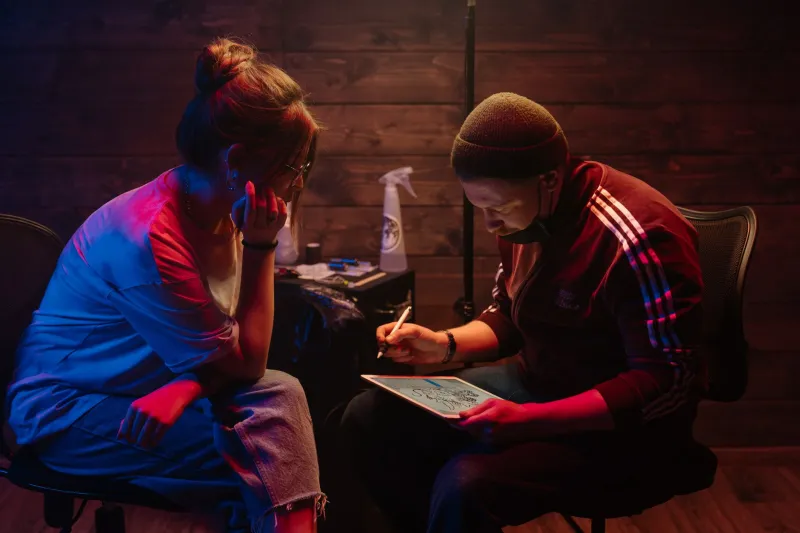
Imagine walking into a tattoo studio, design in hand, adrenaline buzzing — and your artist tells you to come back in two weeks. No needle, no ink, just a politely enforced pause. For a lot of people, that would feel like a buzzkill. For a growing number of tattoo artists across the country, it's becoming standard practice.
Call it the tattoo cooling-off period. Some artists are building it directly into their booking process, requiring clients to sit with a finalized design — sometimes for days, sometimes for weeks — before the appointment gets locked in. It's a small policy with surprisingly big implications for how we think about permanence, impulse, and the art that ends up on our bodies forever.
Where This Is Coming From
Maya Reyes, a traditional and neo-traditional artist based in Austin, Texas, started requiring a 10-day reflection window for all new clients about three years ago. She didn't do it because she was tired of doing cover-ups (though she's done plenty). She did it because of a single conversation that stuck with her.
"A client came in for a memorial tattoo for her dad," Reyes says. "She'd lost him two months before. The design was beautiful — she'd thought it through — but she was still in acute grief. We talked, and I just felt like she needed more time. Not because the tattoo was wrong, but because she wasn't ready."
After that, Reyes made the waiting period part of her intake process. She sends clients a design mockup and asks them to live with it — on their phone wallpaper, printed out and taped to their mirror, whatever works — before they confirm the booking. The result, she says, has been fewer last-minute design changes, fewer post-tattoo regrets relayed back to her, and a noticeably different energy in her studio on appointment day.
"People come in certain," she says. "There's a confidence that wasn't always there before."
The Psychology of the Pause
There's real science backing up what artists like Reyes are doing intuitively. Research on decision-making consistently shows that people who delay major choices — especially emotionally charged ones — report higher satisfaction with outcomes. The phenomenon, sometimes called the "cooling-off effect," is why many states require waiting periods for things like firearm purchases and major financial contracts.
Tattoos don't come with a legal waiting period in any US state, but the principle applies. The initial excitement of a tattoo idea often involves a dopamine spike — the thrill of imagining yourself transformed. That spike can obscure doubts, rush decisions, and compress a process that genuinely benefits from space.
Jordan Whitfield, a tattoo artist in Chicago who runs a small private studio in Logan Square, puts it plainly: "The version of you that books the appointment and the version of you that shows up two weeks later are different people. That's not a bad thing. It just means the design has to work for both of them."
Whitfield requires a 7-day minimum between design approval and the actual appointment for any piece larger than a palm. For larger custom work, he asks for two weeks. He says the most common outcome isn't cancellation — it's refinement. Clients come back with small but meaningful tweaks: a different placement, a slightly adjusted size, a font change. "Those adjustments matter a lot when something's going to be on your body for life."
Not Everyone's Sold
The policy isn't universally beloved, and that's worth acknowledging. For some clients, especially those who've spent months researching an artist and already feel certain about their design, a mandatory wait can feel paternalistic — like the artist doesn't trust their judgment.
Denver-based client Tasha Okafor had that exact reaction when her artist introduced a two-week hold before her appointment. "I'd been planning this sleeve for over a year. I had reference images, I had a Pinterest board, I'd done consultations. I didn't need to wait," she says. "I understood why the policy existed, but I felt like I'd already done that work."
Her artist, she notes, was flexible once she explained her process, shortening the hold to three days as a compromise. The tattoo came out exactly as planned, and Okafor has zero regrets. But she raises a fair point: a blanket policy doesn't always account for the client who walks in more prepared than most.
This is the tension at the heart of the debate. A waiting period is a tool, not a mandate from the universe. Its value depends heavily on the individual client, the nature of the piece, and the relationship between artist and client.
What It Says About Us Right Now
There's something culturally interesting happening beneath this trend. We live in an era of instant everything — same-day delivery, swipe-right decisions, on-demand content. Tattoos are one of the last truly permanent consumer choices most people make. And yet, the culture around getting them has sped up considerably. Flash sales, walk-in specials, social media trends that move at the speed of a TikTok algorithm — all of it pushes toward now, now, now.
The cooling-off period is, in a way, a quiet act of resistance to that pace. It's artists saying: this is different. This stays.
Reyes frames it as part of her responsibility as an artist. "I'm not just executing a design. I'm collaborating on something that's going to be part of someone's body and story for the rest of their life. That deserves a little reverence."
Whitfield echoes the sentiment. "I want people to love their tattoos in 20 years. The waiting period is me investing in that."
How to Know If It's Right for You
If your artist has a cooling-off policy, lean into it rather than fighting it. Use the time intentionally. Try these approaches:
- Set the design as your phone wallpaper. You'll see it dozens of times a day in all kinds of moods.
- Ask yourself the 3am question. How do you feel about it when you're tired, stressed, or just waking up?
- Talk about it. Not to get permission — but to hear yourself explain why you love it. If the explanation feels solid, that's a good sign.
- Sit with the placement. Draw it on with a marker or use a temporary tattoo. Live in it for a few days.
If the design still feels right after all of that, you're not just excited — you're sure. And sure is exactly where you want to be when the needle touches skin.
The Bottom Line
The tattoo waiting period isn't about doubt. It's about depth. The artists implementing these policies aren't trying to talk you out of anything — they're trying to make sure that when you commit, you're really committing. In a world where everything moves fast and almost everything is reversible, there's something genuinely meaningful about slowing down for the things that aren't.
Sleep on it. Your future self will probably thank you.


