Where You Put It Changes Everything: The Art and Science of Tattoo Placement
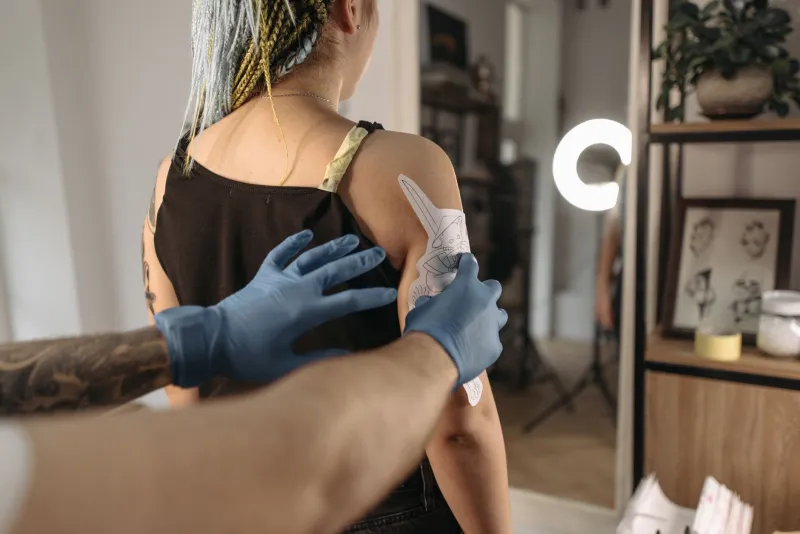
You've spent weeks — maybe months — obsessing over the design. The reference photos are saved. The style is locked in. You've picked your artist. And then they ask the question that somehow catches you off guard every time: Where do you want it?
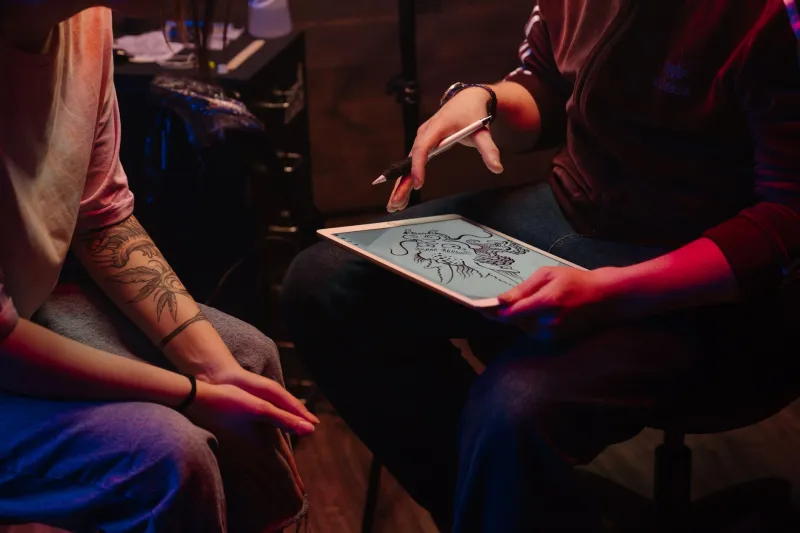
For most clients, placement feels like the easy part. You point to your forearm, your ribs, the back of your calf. Done. But for the artist sitting across from you, that answer opens up a whole other conversation — one about skin behavior, muscle movement, visual flow, and how a tattoo is going to look not just on the day it heals, but ten, twenty, thirty years down the line.
Placement, it turns out, is one of the most strategically complex decisions in the entire tattoo process. And most clients have no idea it's even happening.
The Body Is Not a Flat Canvas
Here's the thing art school doesn't prepare you for when you're designing on paper: human bodies are curved, shifting, stretching things. A design that looks perfectly balanced on a flat sketch can warp completely when wrapped around a bicep or stretched across a ribcage.
Experienced artists spend years learning to think in three dimensions. They're mentally mapping how a piece will sit when you're standing still, how it'll distort when you flex, and how the natural contours of your body can either work with or against the design's geometry.
A bold geometric piece, for example, tends to thrive on flatter surfaces — the outer forearm, the upper back, the shin. Put that same design on the inner bicep, where the skin creases and bunches when you bend your arm, and the crisp lines start to look unintentional. Artists who specialize in geometric work will tell you this almost immediately, and if they don't bring it up, that's worth noticing.
Floral designs, on the other hand, are more forgiving. Their organic shapes naturally follow curves, which is why they work so beautifully on thighs, shoulders, and ribcages. The curve becomes part of the composition.
The Longevity Factor: Where Ink Actually Lasts
Not all skin ages the same way. This is one of the most important — and least-discussed — truths in tattoo culture, and it's something every serious artist factors into their placement recommendations.
Areas with high sun exposure, like the tops of hands and feet, outer forearms, and the back of the neck, are notorious for fading faster than spots that stay covered. UV light breaks down ink over time, and if you're someone who spends a lot of time outdoors without religiously applying SPF, you're going to watch a forearm piece lose its vibrancy way sooner than a thigh piece that spends most of its life under denim.
Then there's the friction issue. Inner wrists, the sides of fingers, and areas that constantly rub against clothing or other skin — think inner thighs and underarms — are high-wear zones. Fine-line work and delicate detail in these spots tends to blur and soften faster than the same style placed somewhere with less daily friction.
Artists working in styles like blackwork or traditional American often steer clients toward upper arms, thighs, and the upper back for their most intricate pieces — not because those spots are easier to tattoo, but because they hold up. The ink stays truer, the lines stay crisper, and the piece looks intentional decades later instead of like a faded memory.
Chest vs. Sleeve: A Conversation About Visibility and Commitment
One of the most common placement debates artists navigate is the chest-versus-sleeve conversation. Both are significant commitments, but they carry very different social weight in American culture right now.
A sleeve is visible. It's a statement you make every time you wear a t-shirt, every time you shake someone's hand in a professional setting, every time you reach for something at a dinner table. Artists increasingly talk to clients about the lifestyle dimension of a sleeve — not to discourage it, but to make sure the person on the other side of the needle has thought it through. In 2025, workplace tattoo stigma has shifted dramatically, but it hasn't disappeared, and an artist who skips that conversation isn't doing their client any favors.
The chest, by contrast, is intimate. It's yours in a way a sleeve isn't. Artists who do a lot of chest pieces often describe them as the most personal work they do — pieces clients keep close, share selectively, and connect with deeply. The chest also offers some of the best real estate for large-scale compositions. It's relatively flat, it doesn't stretch dramatically with movement, and the natural symmetry of the sternum gives artists a built-in design axis to work with.
The Thigh Is Having a Moment — Here's Why Artists Love It
If you've spent any time in tattoo shops or following artists on Instagram, you've probably noticed that thigh pieces are everywhere right now. There's a reason for that, and it goes beyond trend.
The thigh is, from a purely technical standpoint, one of the best spots on the body to tattoo. It's a large, relatively flat surface. It doesn't get the same sun exposure as arms. It doesn't experience the kind of constant movement and friction that degrades ink faster. And because of its size, it gives artists genuine room to work — to build compositions that breathe, to include negative space without the design feeling cramped.
For clients, there's also the visibility factor. A thigh piece is easy to show off when you want to and easy to keep private when you don't. That flexibility matters to a lot of people, especially those who are still building their tattoo collection and figuring out their own comfort level with visibility.
The Conversation You Should Be Having Before You Book
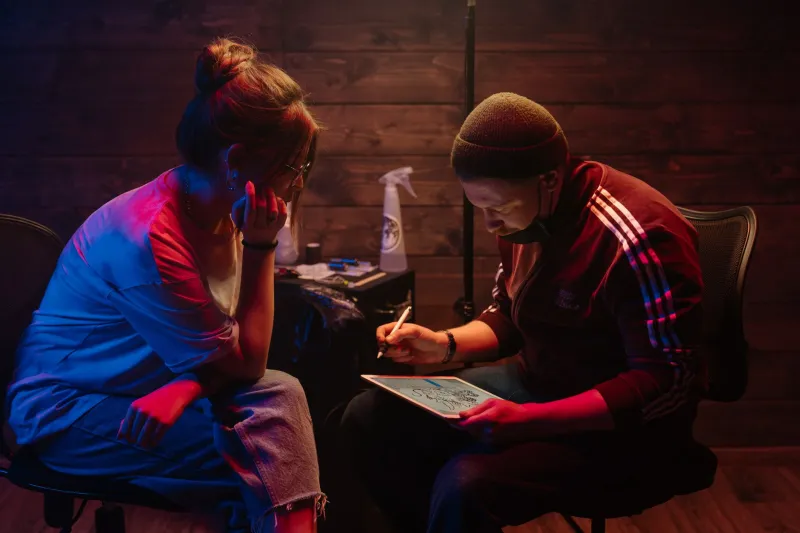
If your artist isn't asking about placement — or if they're not pushing back a little when you suggest a spot that doesn't quite fit the design — it might be worth bringing it up yourself. A good artist doesn't just execute what you hand them. They're thinking about how that piece is going to age on your specific body, in your specific life.
Ask them where they'd put it if the choice were theirs. Ask them how the design might need to change to work in the location you're considering. Ask them which spots they've seen hold up best over time for the style you're going for.
The best placement decisions aren't made by one person. They're made in conversation — the client's vision meeting the artist's expertise somewhere in the middle. That's where the magic happens. And it almost always starts with a question that sounds simple but isn't: Where do you want it?