Before the Needle Drops: What a Great Tattoo Artist Actually Needs to Know About You
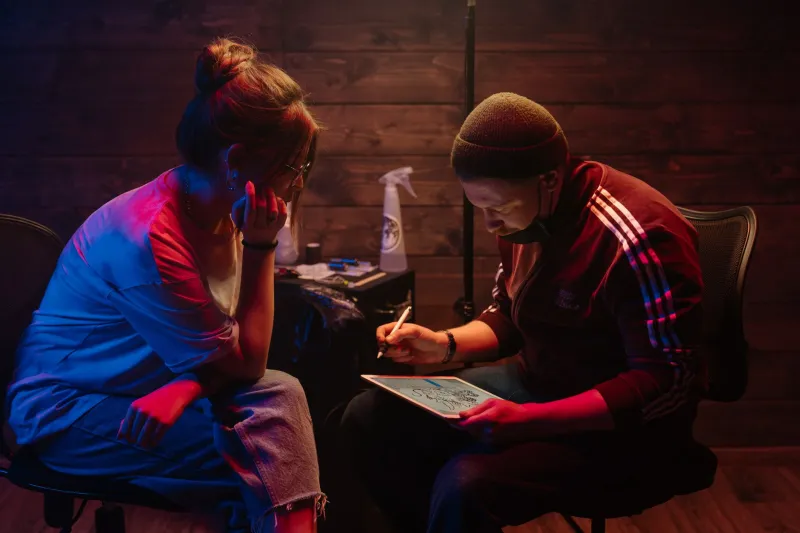
Most people walk into a tattoo consultation with a Pinterest board, a vague idea, and a little nervous energy. What they don't expect is to be asked about their job, their sleep habits, or whether they're planning to have kids. But if your artist is asking those kinds of questions? That's actually a really good sign.
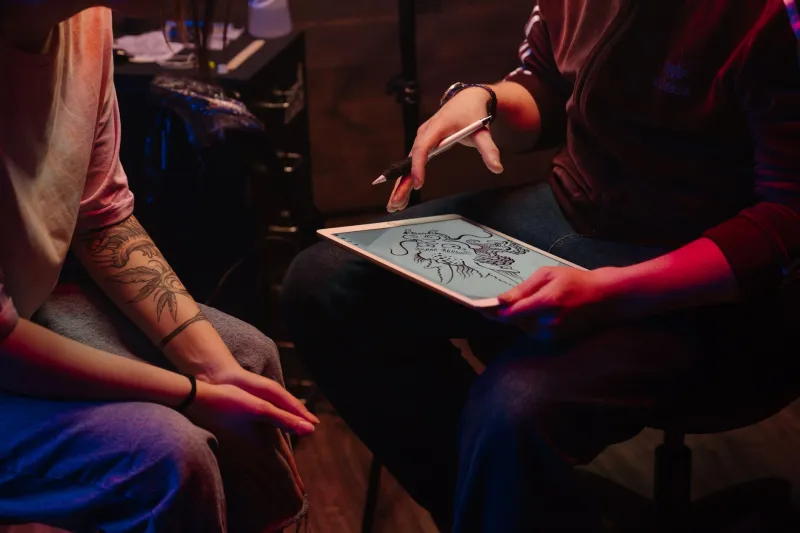
The consultation — that pre-appointment conversation that often gets treated like a formality — is quietly one of the most important parts of the whole tattooing process. It's where a thoughtful artist starts separating what you want from what you actually need. And the difference between those two things? That's where meaningful body art lives.
"Why Are You Getting This?"
It sounds almost too simple, but you'd be surprised how many artists skip it entirely. Mara Delgado, a Philadelphia-based tattoo artist who specializes in botanical illustrative work, says this is always her first question — and she means it genuinely.
"I'm not trying to talk anyone out of anything," she says. "But if someone tells me they want a butterfly because they went through a rough breakup and they're finally feeling free again, that changes everything about how I approach the design. It's not just a butterfly anymore. It's their butterfly."
The 'why' behind a tattoo shapes placement, scale, color palette, and even linework style. An artist who doesn't ask is essentially designing blind. They might produce something technically flawless that still feels hollow to the person wearing it.
The Placement Conversation Goes Deeper Than You Think
Placement isn't just an aesthetic decision. It's a practical one, and the best artists know that. Where a tattoo sits on your body affects how it ages, how it heals, and how it interacts with your daily life.
Tattoos on high-friction areas — inner arms, feet, fingers — fade and blur faster. Spots that see a lot of sun exposure need extra UV protection or they'll lose vibrancy within a few years. And then there's the lifestyle factor.
Denver-based artist Theo Nakamura puts it plainly: "I always ask what someone does for work. Not to judge them, but because it matters. If you're a kindergarten teacher, a neck tattoo might affect your life in ways you haven't fully thought through. If you're a welder, I need to know that your forearms are going to be sweating under gear all day. That affects healing."
A good consultation isn't about gatekeeping — it's about giving you information so you can make the best possible decision for your life.
Are You Thinking About Your Future Self?
This one catches a lot of people off guard, and it's not meant to be a buzzkill. It's just reality: your body is going to change, and a smart artist knows how to design for that.
Pregnancy, weight fluctuation, muscle gain, aging — all of these shift the canvas. An artist who asks about your long-term plans isn't being presumptuous. They're thinking about how to build a design that holds up across decades, not just looks great in a freshly-healed Instagram photo.
Chicago-based artist Simone Reyes, who does a lot of large-scale work, says she always asks clients where they see themselves in ten years. "If someone tells me they're planning to get pregnant in the next couple years, I'm going to think differently about where we put a piece on their abdomen. If someone's actively training for bodybuilding, that affects how I draw the design so it doesn't distort as their muscles grow. These are things I genuinely need to know."
The Skin Conversation Nobody Wants to Have
Here's a truth that doesn't get talked about enough: not all skin is the same, and not all skin takes ink the same way. Skin tone, texture, scarring history, sensitivity — all of it matters.
A consultation with a thoughtful artist will include honest conversation about how certain styles or colors translate on your specific skin. Pastel watercolor designs that look dreamy on very light skin may not read the same on deeper tones. Some inks show up more vibrantly than others depending on undertones. Scar tissue takes ink differently than unaffected skin.
None of this is a barrier — it's just information. An artist who brings it up isn't being weird or discriminatory. They're doing their job well. The ones who don't bring it up and then let you walk out with a design that won't hold up on your skin? That's the problem.
What Questions Should You Be Asking?
The consultation is a two-way street, and the best ones feel like a genuine conversation. While your artist is getting to know you, you should be getting to know them too. Some questions worth raising:
- How do you approach designs that need to work with existing tattoos? This tells you a lot about their spatial thinking.
- What's your healing protocol, and what aftercare do you recommend? There's no single right answer, but their confidence and clarity matters.
- Have you worked on skin similar to mine before? Especially relevant if you have darker skin, significant scarring, or very sensitive skin.
- What's your honest opinion on this placement? A good artist will tell you if they think you're making a choice that might not age well — even if it's not what you want to hear.
And maybe most importantly: Do you feel comfortable with this artist? If the consultation feels rushed, transactional, or like they're just trying to get you booked and out the door, trust that instinct.
When the Consultation Reveals Something Bigger
Sometimes what starts as a consultation becomes something unexpectedly meaningful. Mara recalls a client who came in wanting a small moon on her wrist — simple, quick, no fuss. But when Mara asked why that particular symbol, the client started talking about her late mother, who used to point out the moon to her as a kid.
"We ended up redesigning the whole thing," Mara says. "It became this gorgeous crescent with a tiny cardinal hidden in the negative space — because cardinals were her mom's favorite bird. The client cried when she saw the sketch. That never would have happened if I'd just said 'okay, moon on the wrist, got it.'"
That's the thing about a real consultation. It doesn't just improve the design — it changes the whole experience. The tattoo goes from something you chose to something that was made for you.
The Bottom Line
If your artist is spending the consultation asking questions that feel almost too personal, lean into it. They're not overstepping. They're doing the work that separates a tattoo you'll love at 25 from one you'll treasure at 65.
The needle comes later. The real art starts in the conversation.