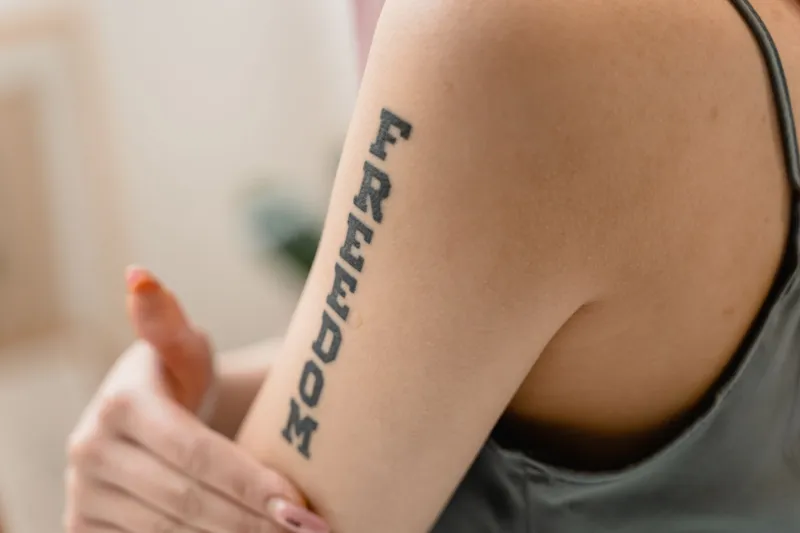
Nobody Actually Wants Their Tattoo Gone — So Why Does the Regret Story Keep Winning?

Ask anyone without a tattoo what they think about the people who have them, and you'll probably hear some version of the same warning: You're going to regret that someday. It's practically a cultural reflex at this point — a hand-me-down piece of wisdom passed from skeptical parents to nervous aunts to coworkers who've never held a tattoo machine in their lives.
But here's the thing. The people who actually work in the tattoo and removal industry — the artists, the dermatologists, the laser technicians — will tell you something different. Something that doesn't make for a clean cautionary tale, but is a lot closer to the truth.
Most people don't actually want their tattoos gone.
The Number That Changes Everything
According to a widely cited Harris Poll, roughly 17% of tattooed Americans say they regret at least one of their tattoos. That sounds significant until you flip it around: 83% don't. And even within that 17%, "regret" covers a lot of ground — from mild "I wish I'd chosen a different design" feelings to full-on "I need this removed immediately" urgency.
Dr. Priya Mehta, a dermatologist based in Chicago who offers laser removal services, says the gap between expressed regret and actual removal requests tells the real story. "People come in for consultations all the time and we talk through their options," she says. "But a surprising number of them — I'd estimate close to half — leave without booking a removal session. Once they actually sit down and talk about it, they realize the tattoo isn't the problem."
So if the ink isn't the problem, what is?
Pressure Is Wearing a Lot of Different Costumes
Tattoo artists have been watching this pattern play out for years. Miami-based artist Dani Reyes, who has been tattooing for over a decade and runs a thriving studio in Wynwood, puts it bluntly: "Nine times out of ten, when someone comes in asking about a cover-up or telling me they're thinking about removal, the first thing I ask is whether someone in their life has been giving them a hard time about it. And nine times out of ten, the answer is yes."
That "someone" might be a new employer, a romantic partner, a parent who never got over the initial shock, or even just the ambient noise of living in a culture that still, in 2024, treats visible tattoos as a sign of poor judgment in certain contexts.
Removal specialist Marcus Tran, who operates a clinic in Austin, Texas, has developed what he calls an informal intake process specifically designed to surface this kind of external pressure. "I ask people to describe how they feel about the tattoo when they're alone — not at work, not around family, just by themselves. And the answer is almost always neutral to positive. The negative feelings are almost entirely situational."
This distinction matters enormously. A tattoo that makes you feel proud in your bathroom mirror but anxious in a job interview isn't a tattoo you regret. It's a tattoo navigating a world that hasn't fully caught up yet.
The Stories We Tell About Imperfection
There's another layer to this that doesn't get discussed enough: the difference between a tattoo you've outgrown stylistically and a tattoo you genuinely wish didn't exist.
A lot of people carry early tattoos that, by their own admission, aren't technically great. Flash designs from walk-in shops. Names inked in a moment of certainty that didn't survive the year. Tribal patterns chosen at nineteen because they seemed meaningful and now feel borrowed. These tattoos often get lumped into the "regret" category, but artists like Dani push back on that framing.
"A bad tattoo is still your tattoo," she says. "It's still a chapter. I've had clients come in wanting to cover something up and we start talking about it and they end up crying — not because they hate it, but because it reminds them of who they were. That's not regret. That's memory."
The psychological research on this is actually pretty interesting. Studies on body image and identity suggest that people form attachments to their physical markers — including tattoos — in ways that run deeper than aesthetic preference. Removing a tattoo, even one that's technically "bad," can sometimes feel like erasing evidence of your own life. And that dissonance is part of why so many consultation appointments end without a removal booking.
When Removal Is the Right Call
None of this is an argument against removal. There are absolutely situations where laser treatment is the right, healthy choice — tattoos linked to abusive relationships, symbols that no longer reflect someone's identity or values, or work done by inexperienced artists that genuinely causes distress. Dr. Mehta is clear on this: "Removal can be incredibly freeing for the right person in the right situation. We just need to make sure we're solving the actual problem."
The issue is when removal gets framed as the default response to any tattoo-related discomfort — when the industry, the media, and well-meaning family members treat regret as inevitable and erasure as the obvious solution. That framing does a disservice to the complexity of what tattoos actually mean to the people who wear them.
Accepting the Ink You Have
Some of the most interesting conversations happening in tattoo culture right now aren't about removal at all. They're about integration — about finding a way to live peacefully with the art on your body, even the pieces that feel complicated.
Marcus Tran has started referring some of his consultation clients to therapists who specialize in body image work. "It sounds unusual coming from someone in the removal business," he laughs, "but my job is to help people feel better about their bodies. Sometimes that means laser. Sometimes it means talking to someone about why a piece of ink has taken on so much weight."
For a lot of people, the path forward isn't removal or even a cover-up. It's reframing. It's understanding that a tattoo you got at twenty-two that no longer represents you at thirty-eight isn't a mistake — it's documentation. It's proof that you were alive and making choices and figuring things out, which is, when you think about it, exactly what being human looks like.
The regret myth persists because it's a tidy story. Impulsive decision, permanent consequence, painful lesson. It fits neatly into a cultural narrative about tattoos as reckless.
But the messier, truer story — the one artists and specialists see every day — is about people who love their ink more than they're allowed to admit, navigating a world that keeps telling them they shouldn't.