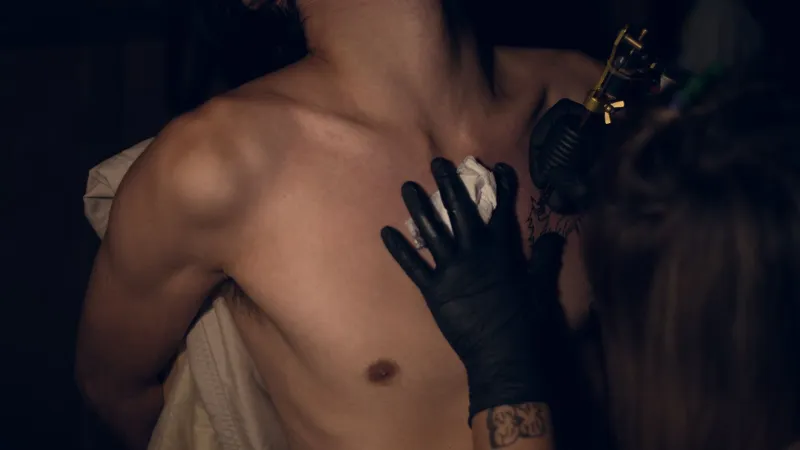
For You, Mom: The Deeply Personal World of Parent-Tribute Tattoos
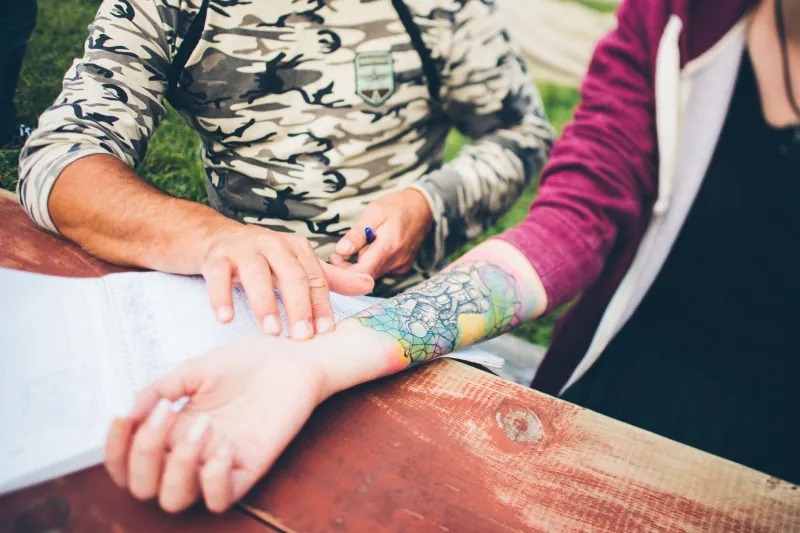
Some tattoos are easy to explain. Others take a minute. And then there are the ones where you have to stop, take a breath, and figure out where to even begin.
Parent-tribute tattoos are almost always in that last category.
They're not the same as memorial tattoos, though they sometimes overlap. They're not always about grief or loss. Sometimes they're about love that's been there all along and finally needed a permanent form. Sometimes they're about a relationship that broke and slowly, painfully healed. Sometimes they're about a middle-aged adult surprising themselves — and their parent — by showing up to Thanksgiving with a portrait of their mom's handwriting inked onto their arm.
These tattoos are their own category of body art, and they carry a weight that even experienced collectors often describe as different from anything else they wear.
What Makes These Pieces Different
Los Angeles-based tattoo artist Carmen Delgado has been doing portrait and memorial work for eleven years. She estimates that parent-tribute pieces — not post-death memorials, but tattoos made for living parents or as tributes to parental influence — make up roughly fifteen percent of the work she books.
"They come in differently than other clients," Carmen says. "There's more at stake emotionally. They've usually been thinking about this for a long time. And they're often trying to solve an emotional problem with the tattoo — trying to say something they haven't been able to say another way."
That emotional complexity shows up in the design process too. Clients doing parent-tribute work tend to bring more reference material, change their minds more, and need more time in consultation. They're not being indecisive — they're being careful. "This isn't just a tattoo they like," Carmen explains. "It's a statement about a relationship. Every choice in the design carries meaning."
The Language of Handwriting and Heirlooms
If there's a signature element in parent-tribute tattoos, it's handwriting. A note in a lunchbox. A recipe card. A birthday card from 1987 that someone kept in a shoebox without fully knowing why. When people want to carry a parent with them, they often reach for something in that parent's own hand.
Jasmine, a 34-year-old nurse in Atlanta, has her mother's handwriting tattooed on her wrist — the word "mija," taken from a birthday card her mom sent during a particularly hard year. "My mom and I had a rough period when I was in my twenties," she says. "We're good now. Really good. But I wanted to mark that — the fact that we made it back to each other."
The tattoo was a surprise. She showed her mom at a family dinner. "She cried. I cried. My aunt cried. It was a whole thing." Jasmine laughs. "But it was the right moment. It said what I wanted to say."
Other clients bring in photographs, objects, even specific fabrics or patterns associated with a parent. Carmen has tattooed a piece based on a mother's signature quilt pattern, a father's handmade woodworking mark, and a grandmother's embroidery design that a client described as "the thing I think of when I think of being safe."
When the Relationship Is Complicated
Not every parent-tribute tattoo comes from a place of uncomplicated warmth. Some of the most meaningful pieces Carmen has worked on came from clients navigating estrangement, ambivalence, or loss that went beyond the physical.
"I've had clients who had difficult relationships with a parent — abuse, abandonment, addiction — and they still wanted to mark something about that relationship," she says. "Sometimes it's about honoring who the parent was at their best. Sometimes it's about honoring the child they used to be. Sometimes it's about closing a chapter."
That nuance matters. Parent-tribute tattoos don't have to be simple celebrations of perfect relationships. They can hold complexity, contradiction, even grief for a relationship that never quite became what it should have been.
Ray, a 41-year-old graphic designer in Seattle, has a small but detailed tattoo of a bird his estranged father used to draw for him when he was little — a habit his dad had of sketching on napkins and receipts. They haven't spoken in over a decade. "I don't have him in my life. But I have that memory of him. And I wanted to keep it somewhere I could see it."
He's clear that the tattoo isn't forgiveness, and it isn't longing for reconciliation. "It's just — he was my dad. That's real, even when everything else is complicated. The tattoo is for that part. Just that part."
The Artist's Role in Getting It Right
For Carmen and artists like her, the consultation process for these pieces is as important as the technical execution. She asks clients to tell her about the parent — not just the design reference, but the person. What did they smell like? What did their hands look like? What's the specific memory you want to feel when you look at this?
"The more I know about the relationship, the better the tattoo," she says simply. "I'm not just drawing a flower or a portrait. I'm translating something that can't be said in words into something visual and permanent. I need to understand what I'm translating."
She's learned over the years to give these consultations extra time and to follow up with clients before the appointment. "Sometimes people think they know what they want and then they sit with it and realize it's not quite right. I'd rather have that conversation before the needle drops."
The Thing You Wear For Someone Else
There's a philosophical tension at the heart of parent-tribute tattoos that people in the community talk about: tattoos are supposed to be for you. Your body, your story, your choice. And yet these pieces are explicitly, intentionally, made with someone else at the center.
Most people who've gotten them don't see that as a contradiction.
"My mom is part of who I am," Jasmine says. "Tattooing something for her is tattooing something for me too. Those aren't separate things."
Ray agrees, in his own way. "I carry my relationship with my dad everywhere. I always have. The tattoo just makes it visible."
Maybe that's what these pieces are really doing — making visible what was already true. The people who shaped us, the relationships that formed us, the love and loss and complexity we carry in our bodies long before we ever decide to mark them with ink.
The tattoo just makes it official.