Second Skin: The Artists Who Turned Cover-Ups Into Their Greatest Work
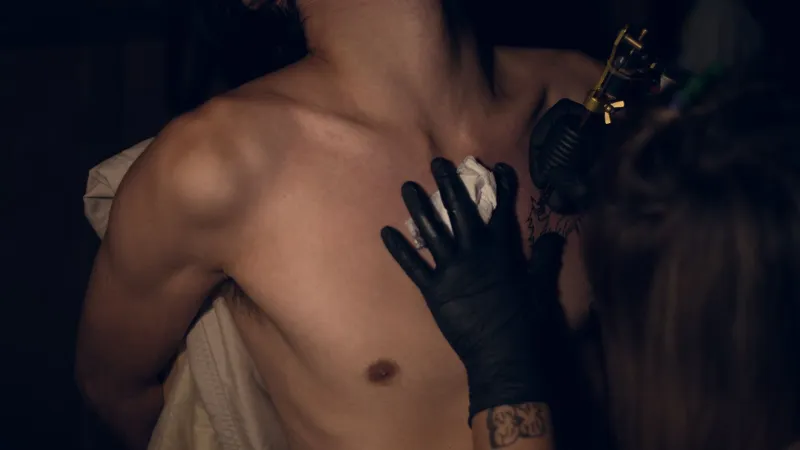
Nadia Flores didn't set out to become a cover-up specialist. It kind of found her.
The San Antonio-based tattoo artist had been working in a traditional shop for about four years when a client came in holding her arm like it was something she wanted to hide from the world. The tattoo in question — a name, rendered in thick gothic script across the inside of her forearm — belonged to someone who was no longer in the picture. The client had looked into laser removal, but the cost and the timeline felt impossible. She'd resigned herself to long sleeves. Forever.
"She sat down and she just said, 'I don't know if anything can be done,'" Nadia recalls. "And I looked at it and I thought — I see something in there. I see where this can go."
Three hours later, a dense watercolor botanical piece had swallowed the name entirely. The client cried. Nadia cried. A specialty was born.
The Technical Beast That Most Artists Quietly Avoid
Let's be clear: cover-up work is hard. Not just creatively — technically. You're not working with a blank canvas. You're working with existing pigment that has already bonded with the skin, often at varying depths, in colors that don't behave predictably when layered over.
Dark inks — navy, black, deep green — are the most stubborn. They absorb light rather than reflecting it, which means anything placed on top needs to be dense enough to visually dominate them. That rules out delicate linework, light watercolor washes, and anything with significant negative space. The physics of tattooing essentially shrink your design options the moment you have existing ink underneath.
This is why, for decades, the standard cover-up playbook was pretty bleak: go big, go dark, go bold. A black panther. A solid mandala. A dense floral cluster. Functional, but not exactly inspired.
"The old approach was basically: hide the evidence," says Marcus Bell, a Philadelphia artist who has built a national reputation specifically around cover-up transformations. "What we're doing now is more like: reimagine the evidence. Use what's there. Work with the ghost of it, not against it."
Working With the Ghost
Marcus's philosophy — and increasingly, the philosophy of a growing cohort of cover-up specialists across the US — starts with a question most artists don't ask: what does the existing tattoo actually offer?
That sounds counterintuitive when the client hates what's there. But experienced cover-up artists have learned to read old ink the way a sculptor reads raw stone. The existing density might become the shadow of a new design. The faded edges might suggest organic shapes. Even the placement and scale of the original work informs what can believably replace it.
"I never try to pretend the old tattoo isn't there," says Kenji Morrow, a Seattle-based artist whose before-and-after portfolio has racked up hundreds of thousands of views on Instagram. "Because it is there. It's part of the skin now. The best cover-ups I've ever done, you can almost feel the history underneath — even if you can't see it."
Kenji's signature style leans into Japanese-inspired imagery — koi, cranes, peonies, waves — because the bold lines and intentional use of dark space in traditional Japanese tattooing happen to be structurally ideal for concealing a wide range of previous work. It wasn't a calculated business decision. It was an artistic alignment that turned into a specialization.
The Psychological Shift Nobody Talks About Enough
Here's what the before-and-afters don't fully capture: the emotional experience of sitting in that chair.
For many clients, the tattoo being covered represents something painful. A relationship that ended badly. A phase of life they've worked hard to move past. A decision made at seventeen that followed them into their forties. Coming in for a cover-up isn't just a cosmetic appointment — it's often a kind of ritual closure.
"I've had clients who don't say much during the session," says Nadia. "And then when they look in the mirror at the end, something just... releases. You can see it in their face. It's not just about the tattoo. It's about feeling like they get to choose what their story looks like now."
That psychological dimension is part of why cover-up specialists often develop unusually deep client relationships. The consultation process alone tends to go longer and get more personal than a standard tattoo appointment. You can't design an effective cover-up without understanding something about why the original piece needs to go — and once that conversation starts, it tends to go places.
"I've heard things in consultations that I'm pretty sure some of these people have never told anyone," Marcus says quietly. "That's a responsibility I take seriously."
When "Fixed" Becomes the Best Work in the Shop
One of the more surprising developments in the cover-up world is that these pieces are increasingly winning the attention that used to go exclusively to pristine original work. Tattoo conventions across the country — from the Hell City Tattoo Festival in Phoenix to the Philadelphia Tattoo Arts Convention — have seen cover-up categories grow in prestige and competition.
Artists who specialize in the discipline report that it's sharpened their overall technical skills in ways that purely original work wouldn't have. The constraints force creativity. The problem-solving builds fluency.
"Every cover-up I do teaches me something I couldn't have learned any other way," Kenji says. "The limitation is the lesson."
For clients, the transformation can be genuinely life-changing in small but real ways. Nadia's client with the gothic-script name — now a botanist living in Austin — wears short sleeves every day. She sent Nadia a photo last spring, arm stretched out in a field, the botanical piece catching afternoon light.
The caption read: This is mine now.
And that, more than any before-and-after, is what cover-up artistry is actually about.


