Your AI Moodboard Is Not a Tattoo: Artists Push Back on the Prompt-and-Paste Era
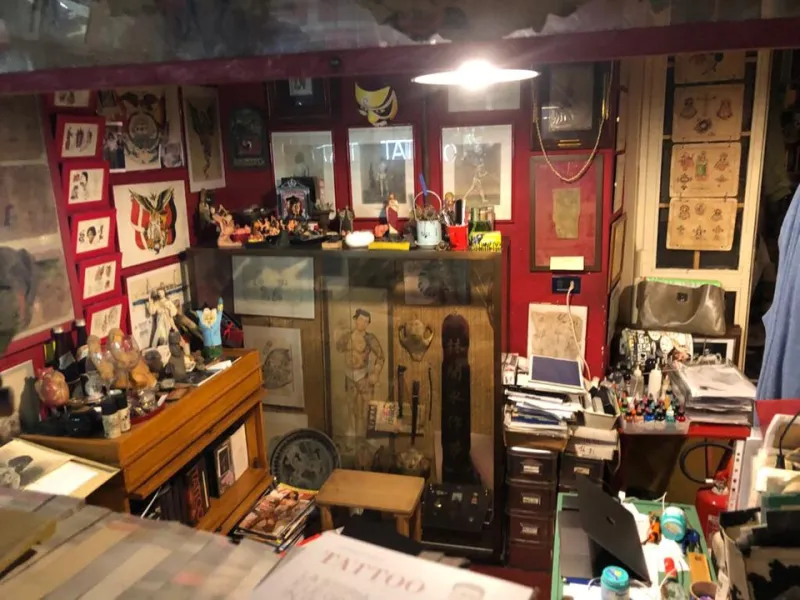
Photo: LIUC6Chiara06, CC BY-SA 4.0, via Wikimedia Commons
A client walks into a shop in Austin, unlocks their phone, and slides it across the counter. Four saved images, all variations on the same dragon — different poses, different scale work, all of them gorgeous, all of them slightly wrong in ways the client can't name and the artist can spot in about three seconds.
That scene now plays out in American studios roughly every hour of the working week. Somebody fed a prompt into a generator at 1 a.m., liked what came back, and arrived for a consult believing the design phase is done. The needle, in their mind, is just the printer.
Four Variations of the Same Dragon
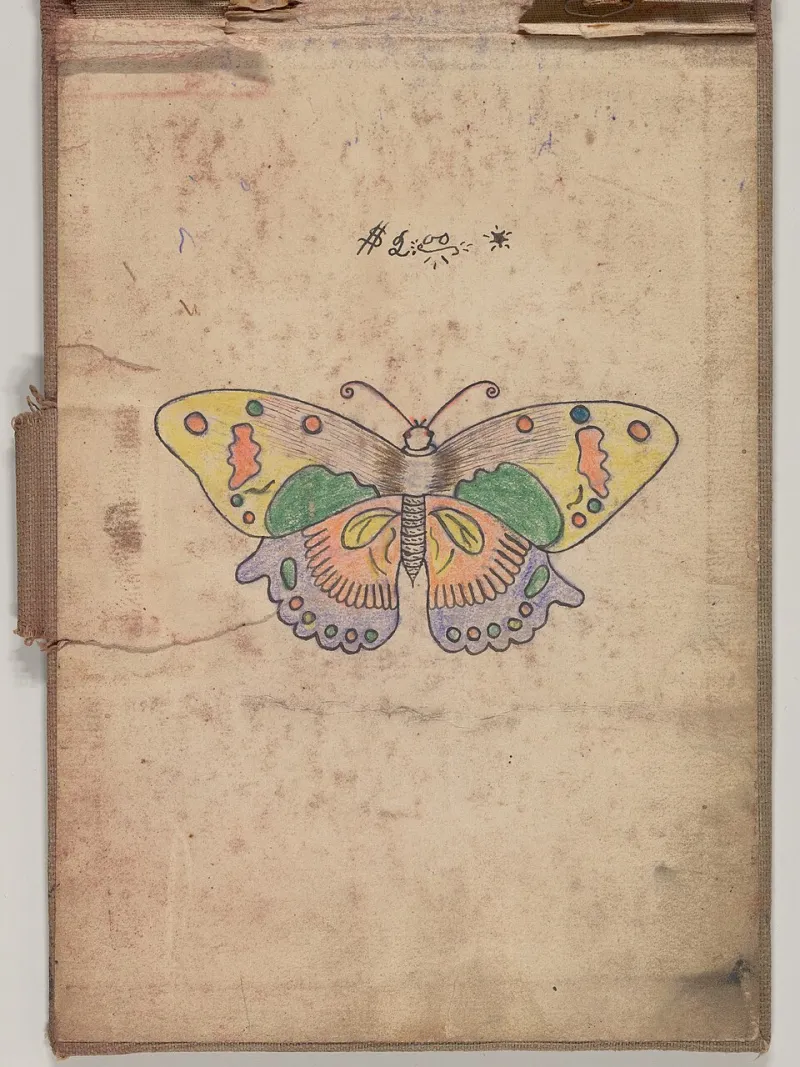
Ask ten artists and you'll get ten versions of the same story. A fox with six toes. Lettering that reads "strenght." A moth whose wings are beautiful until you notice the symmetry is a half-inch off and the antennae have no origin point. These are the tells of images built by pattern rather than by hand — and they're the reason a lot of artists now open a consult by asking one question: where did this come from?
The moodboard itself isn't the crime. Tattoo clients have been bringing torn-out magazine pages and blurry Pinterest screenshots for fifteen years. But there's a difference between inspiration and a deliverable, and the AI era has blurred exactly that line. When the software hands you something polished, the assumption of completion rides along with it — and with that assumption comes a reluctance to pay for the thing artists actually sell.
The Tracing Problem Put On a New Coat
Here's where it gets genuinely complicated. Originality in tattooing has always been a sliding scale. Flash gets reinterpreted, traditional motifs get passed around like family recipes, and everyone knows the difference between homage and a straight lift.
An AI image muddies that. The generator was trained, in many cases, on the work of working tattooers who never consented and never got a cent. Tracing the output means tracing a compression of someone else's drawings — several layers removed, but still downstream. Several artists describe the feeling as "borrowing a car that was already stolen."
Then there's the ownership question, and it's a practical one, not a philosophical one. Under current US Copyright Office guidance, a work made entirely by a machine isn't protected. So an artist who redraws an AI image too faithfully can end up with a tattoo they can't defend, can't license, can't put in a portfolio as their own, and can't stop somebody else from copying.
What Shops Are Writing Into Policy
After a couple of years of messy one-off conversations, studios are starting to formalize. A few approaches are becoming common:
Full ban. A minority of shops now ask that AI images stay off the premises entirely. No reference, no touch. Blunt, easy to enforce, and it costs them some bookings.
Vibe-only intake. More common: AI images accepted as reference for mood, palette, or subject — never as a layout. Clients sign a line acknowledging the final drawing will be original.
Deposit protection. Some artists now structure deposits specifically around redraw time, so the consult and the design work are a paid stage rather than a free sample.
Intake questions. One question on a form — "Did you generate this image with AI?" — does more work than any lecture at the counter. Clients mostly answer honestly. They just didn't realize it mattered.
The Translation Work Nobody Sees
What a generator does in forty seconds, a tattooer does for weeks — and it's not really drawing. It's translation. A design that lives on a curved shoulder blade has to survive movement, stretching, and gravity. Line weights have to hold up at the size the skin allows. Negative space has to be planned for a body that will age, tan, and grow hair through it.
And the image has to survive twenty years. That butterfly rendered with four hundred hairline strokes looks extraordinary on a phone screen and like a gray smudge by 2046.
This is the part clients underpay for and the part AI can't touch, because the machine has never had to talk a nervous 22-year-old out of a design that will look wrong on a forearm. It doesn't know the client just lost a parent. It doesn't know the person has a scar under where the tail needs to land.
What the Machine Still Can't Do
A prompt is a description. A tattoo is a negotiation — between artist, body, budget, and time. The good artists aren't pushing back on AI out of fear of being replaced. They're pushing back because the technology encourages people to skip the conversation that makes the work worth wearing.
Bring the screenshots. Bring the weird dragon. Just don't bring the assumption that the file is finished. The drawing was never the job — it was the least of it.